Chongqing Spice Levels Explained: Mild, Medium and Local
What mild, medium and local heat actually mean in Chongqing, and how to order a hotpot or noodle bowl that matches your tolerance.
- Mild
- Still warm
- Medium
- Serious heat
- Local
- Numbing
- Best tool
- Split pot
On this page
The short answer
Chongqing heat is not one scale. Chili brings burning heat. Sichuan pepper brings a tingling numbness. Beef tallow carries both flavors and makes them cling to every piece of food.
“Mild” in Chongqing is often still spicy to a visitor. Order a split pot, taste before adding more chili and use dairy or rice to reset your mouth.
The three levels
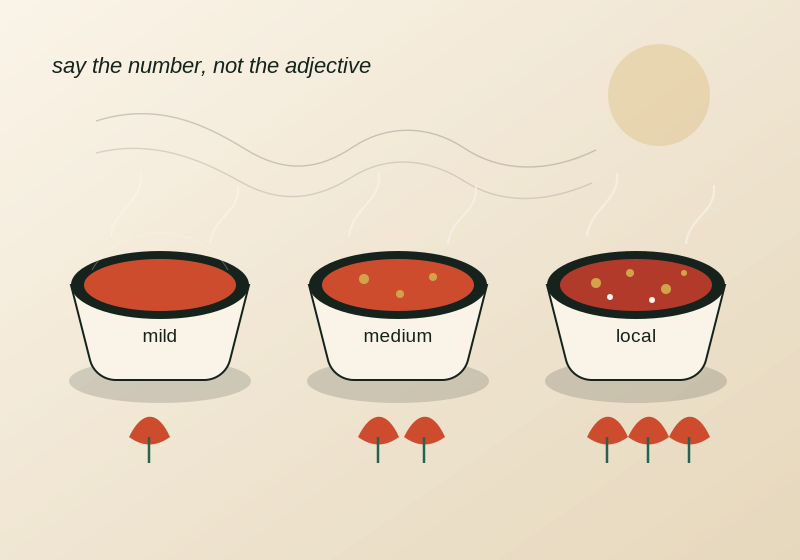
Mild
Mild usually means less chili and a lighter layer of oil. It is a good starting point for travelers who enjoy some heat but do not want to sweat through the meal.
It is not the same as no spice. If you need a true break, ask for a separate clear or mushroom broth.
Medium
Medium is the level most locals order when they want flavor without a challenge. The chili is prominent, the Sichuan pepper is noticeable and the broth builds heat over the meal.
Start here if you regularly eat spicy food. Do not start here if your only experience is mild international cuisine.
Local
Local means the full experience: a dense red broth, a heavy dose of chili and a strong numbing finish. It is delicious, but it can overwhelm a first-timer after a few bites.
Order local only if you know your tolerance. Otherwise, ask for medium and add chili oil from the sauce station.
How to order
Useful phrases:
- 微辣 (wēi là): mild
- 中辣 (zhōng là): medium
- 特辣 (tè là): very spicy
- 不要辣 (bú yào là): no chili
- 鸳鸯锅 (yuān yāng guō): split pot
Point to the menu and say the phrase. If the server looks uncertain, confirm with a translation app.
The numbing factor
Sichuan pepper is not a chili. It creates a vibrating, tingling sensation on the lips and tongue. Some people love it immediately. Others find it strange.
If you want to test it, ask for a small amount of málà oil on the side. Dip a single piece and see how you feel. Do not add more until you know.
What to drink
Water does not cool chili heat effectively. Milk, soy milk, yogurt drinks and sweet tea work better. Rice and plain noodles also help.
Avoid very hot tea during the meal. It adds heat without relief.
How to recover
- Eat a piece of plain rice.
- Dip the next bite in sesame oil.
- Take a break from the spicy side.
- Order a mild soup or a sweet dessert.
- Do not rub your eyes.
The smart order
For a group with mixed tolerance, order a split pot, a plate of beef, tofu skin, potato and greens, and a bowl of rice. Let the spicy side be the flavor and the mild side be the safety net. That way everyone eats well without turning dinner into a dare.
Five phrases for this stop
Photo spots that work
FAQ
Is mild hotpot actually mild?
It is usually milder than the classic broth but still carries chili and Sichuan pepper. Ask for a separate mild broth if you need a true break.
What does numbing mean?
Sichuan pepper creates a tingling, numbing sensation. It is separate from chili heat and can be intense for first-timers.
How do I cool my mouth?
Drink milk, soy milk or a sweet drink. Rice and plain noodles help more than water.